Discover
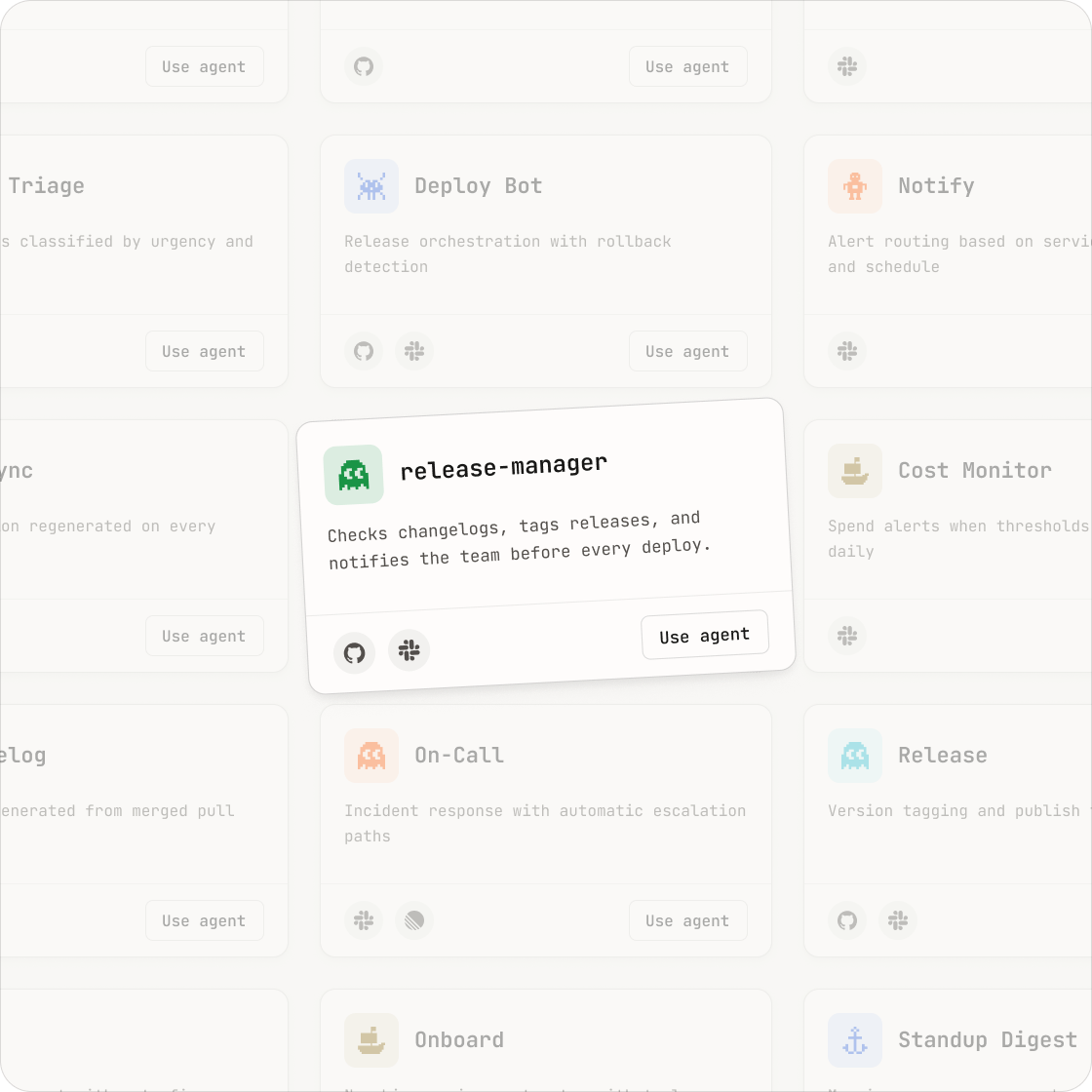
Make it easy to find approved agents, skills, and integrations along with reusable credentials, permissions, infrastructure, and workflows.

AI transformation is not a question of ambition. It's a question of operations. Teams are already experimenting with agents.
The challenge is turning those individual projects into reliable systems the entire organization can use.
Building agents is only the beginning. Organizations need a repeatable way to put them to work across every team. Guild provides the shared infrastructure to move agents into production, make them discoverable across teams, control how they operate, and measure the value they deliver.
Make it easy to find approved agents, skills, and integrations along with reusable credentials, permissions, infrastructure, and workflows.
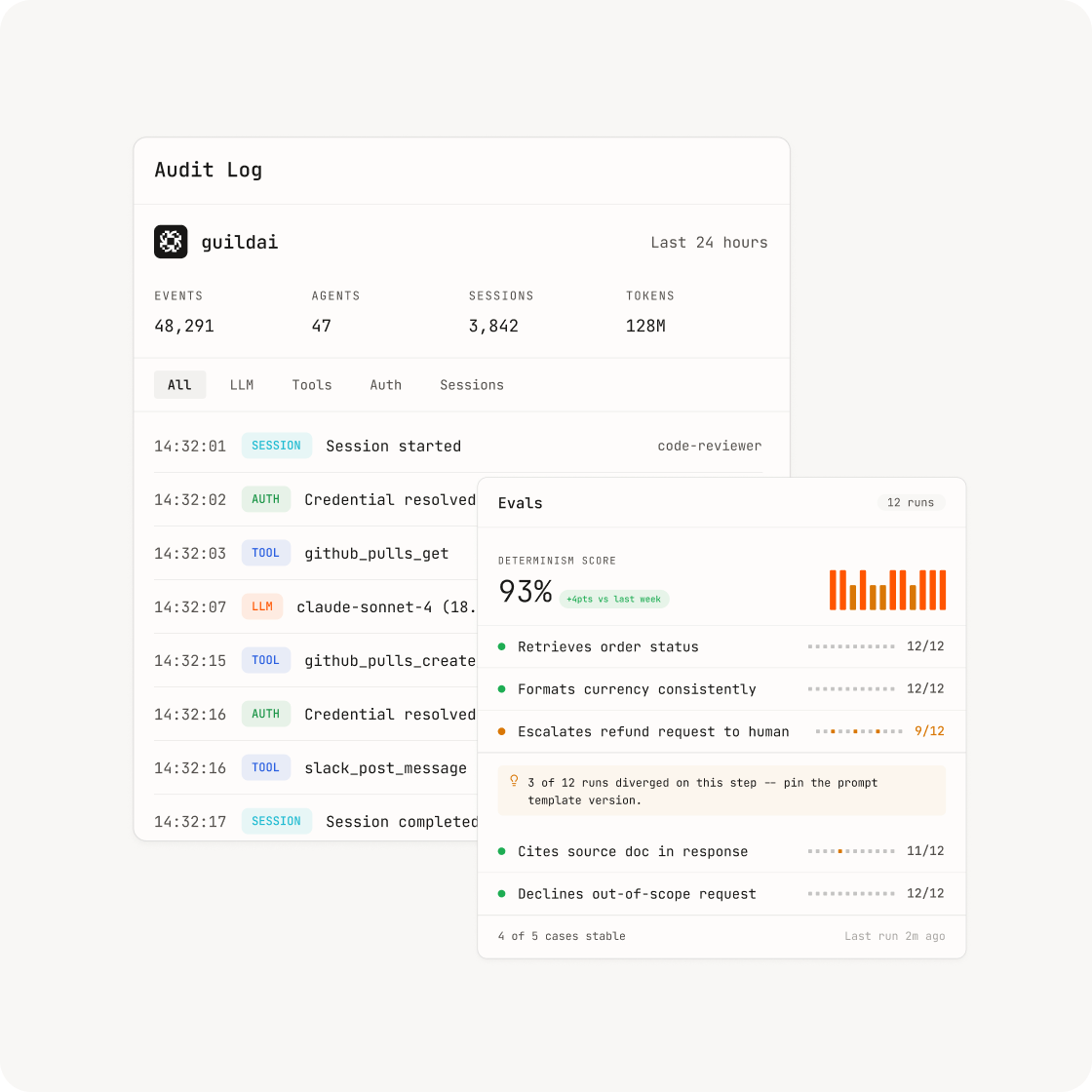
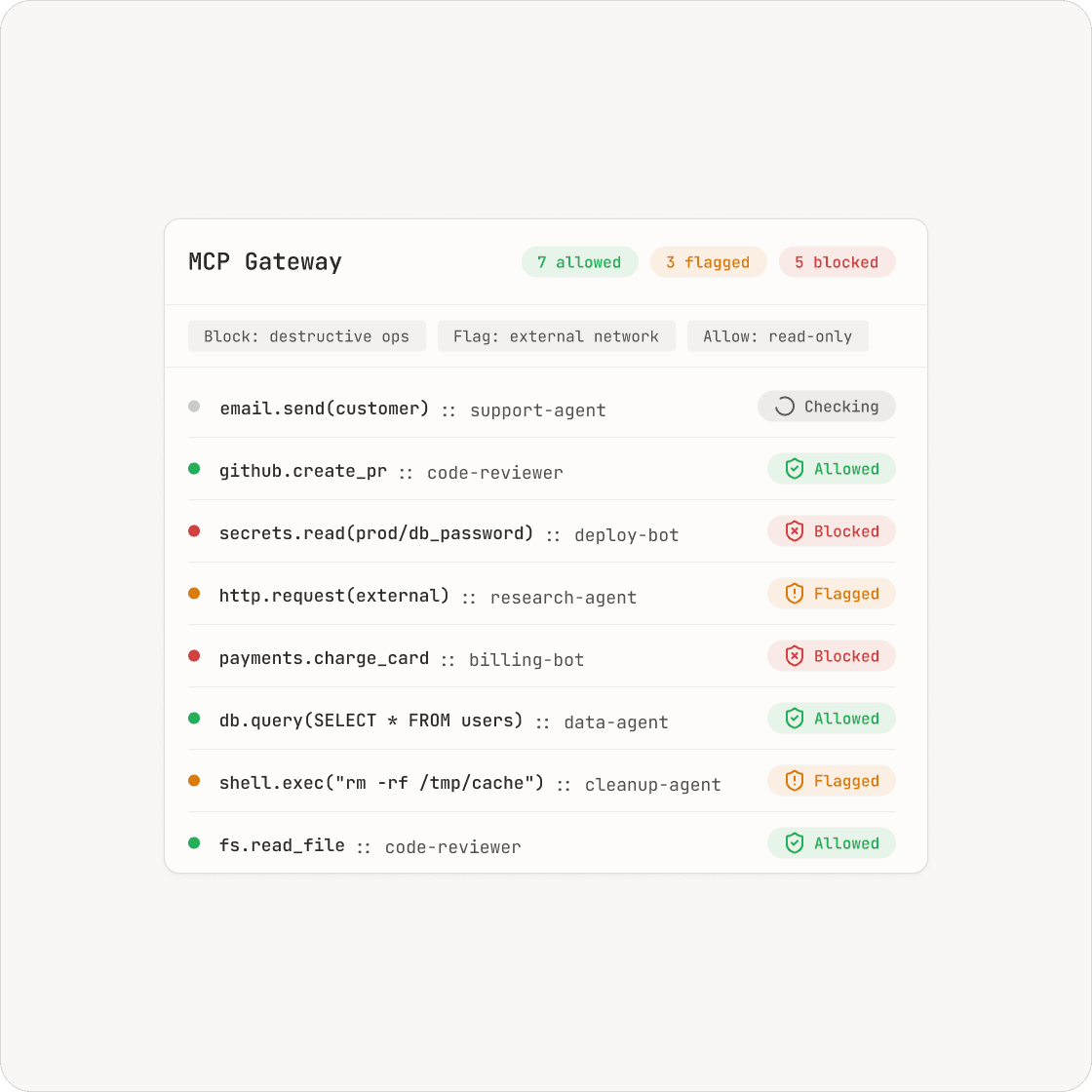
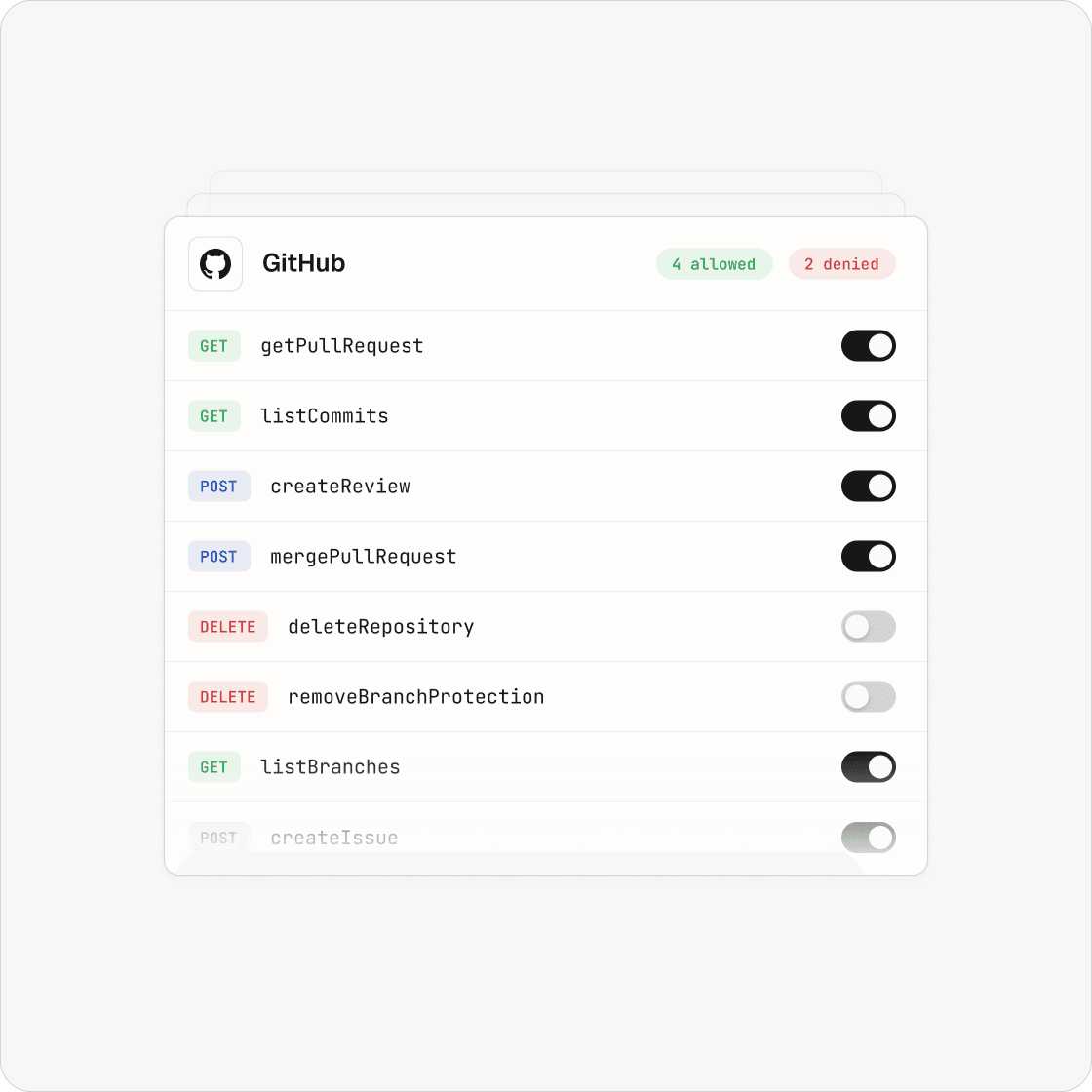
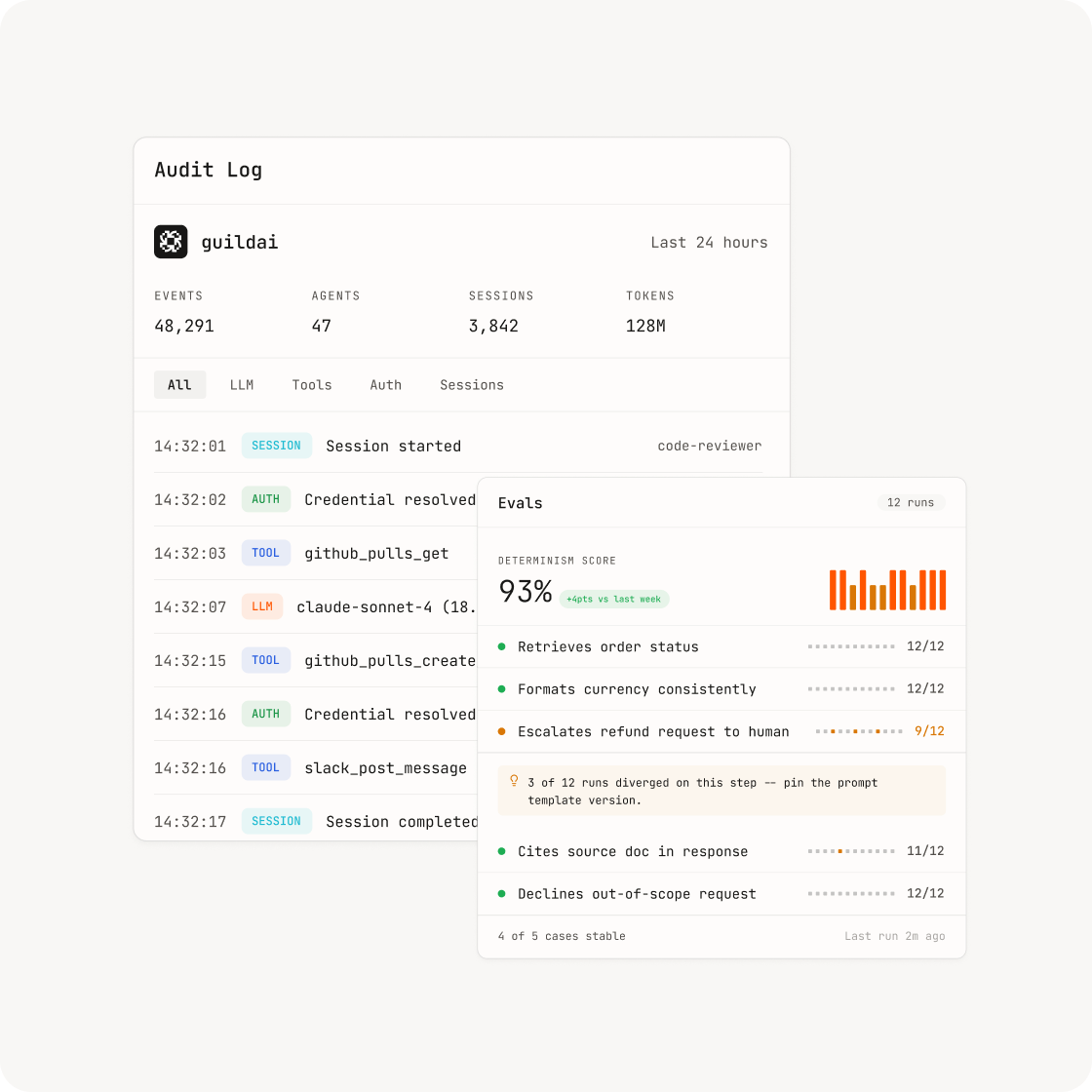
Identify every agent, control what it can access, and maintain a complete record of what it does at runtime.
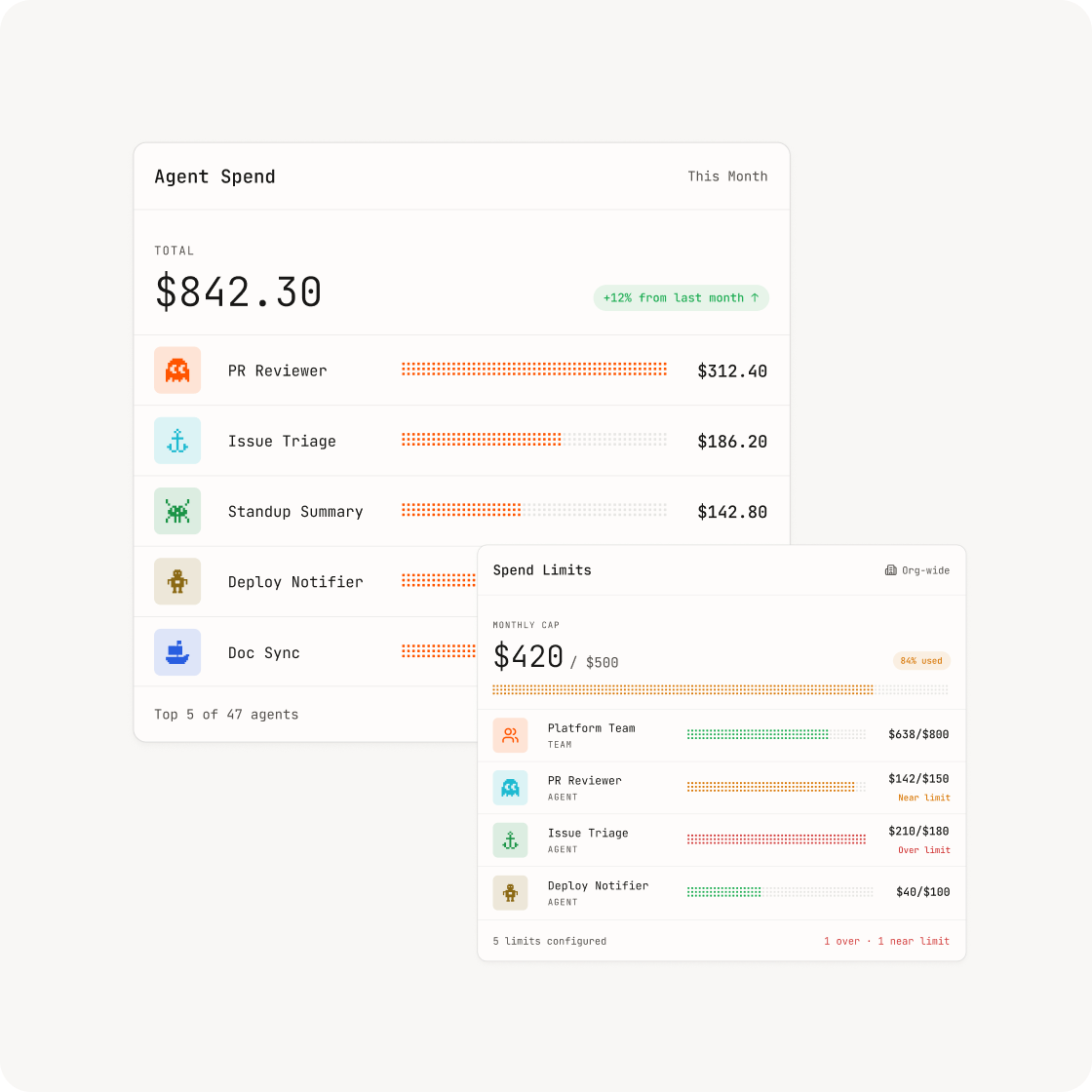
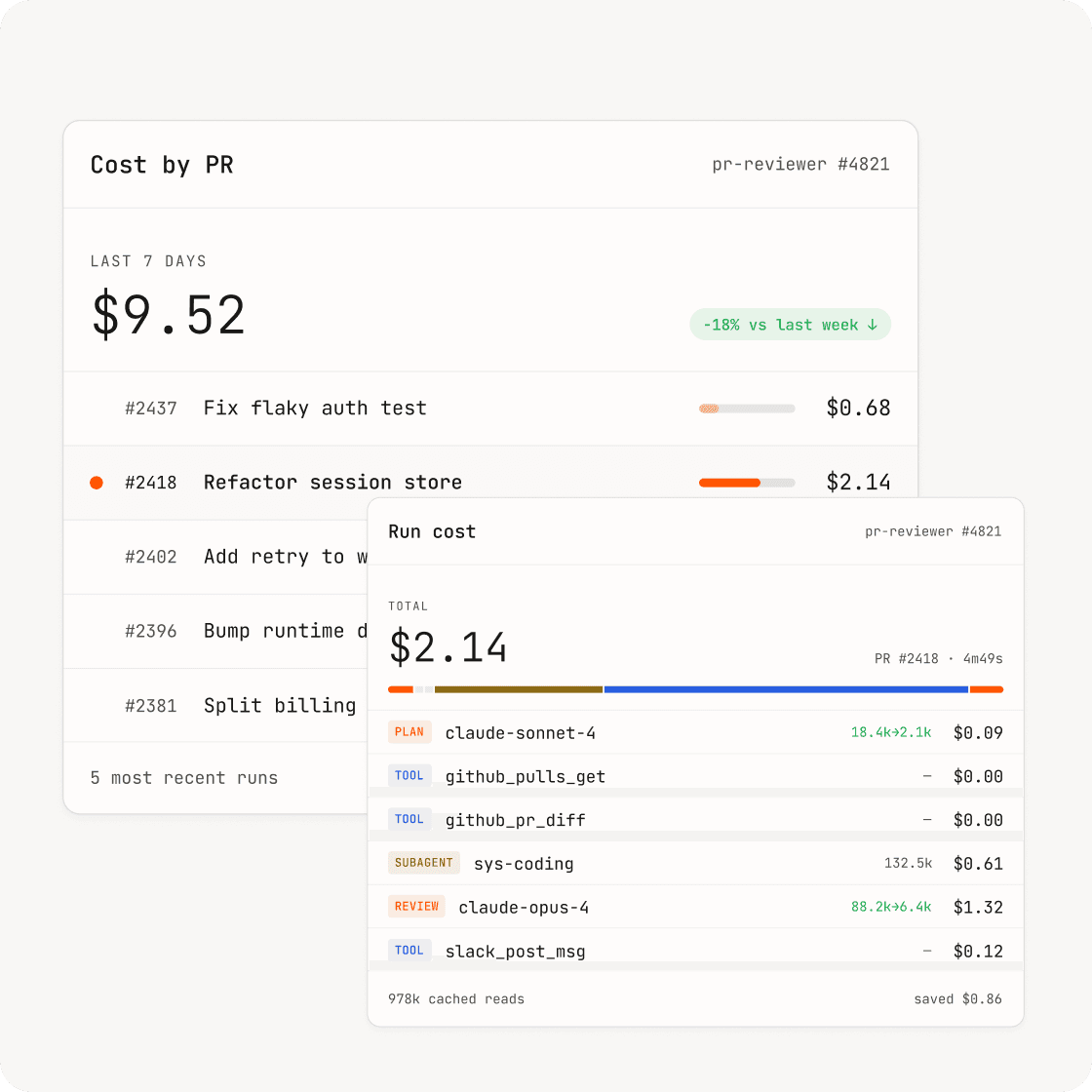
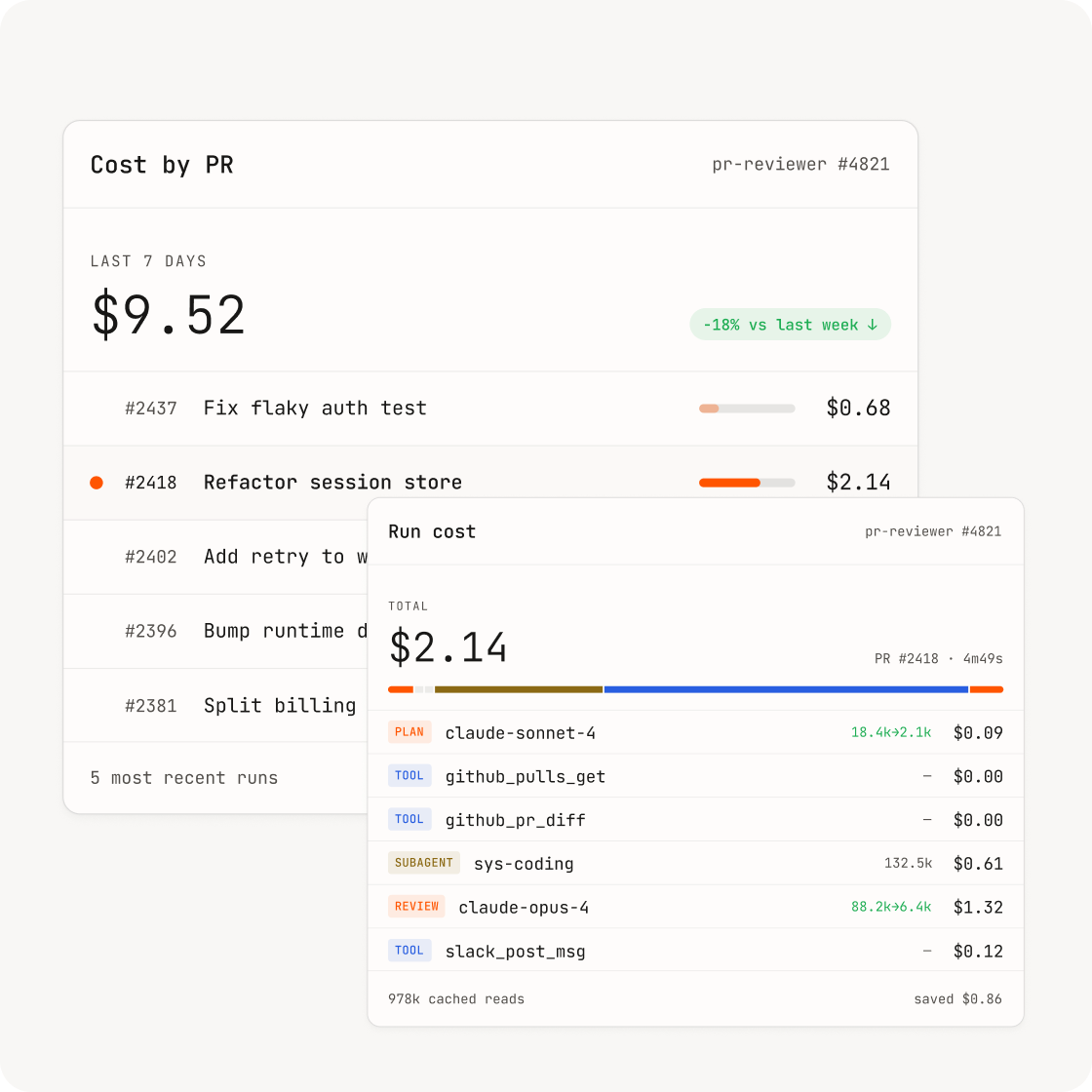
Measure adoption, performance, and spend. Use those insights to optimize agents and scale what works.
Guild creates a shared operating model without forcing every team to work the same way. Engineers keep the tools and workflows they prefer, while platform, security, and leadership teams gain consistent visibility and control across every agent.
Guild gives leaders one view of agent adoption, activity, performance, and cost across the organization.
Move beyond counting experiments. See how agents are changing the way your organization operates.
Give every team a trusted path to production
Turn scattered agent projects into an organization-wide capability. Guild provides the infrastructure teams need to adopt agents faster—and the visibility and control required to scale them with confidence.
Guild keeps you flexible, so agents aren’t tied to a single model vendor or setup.
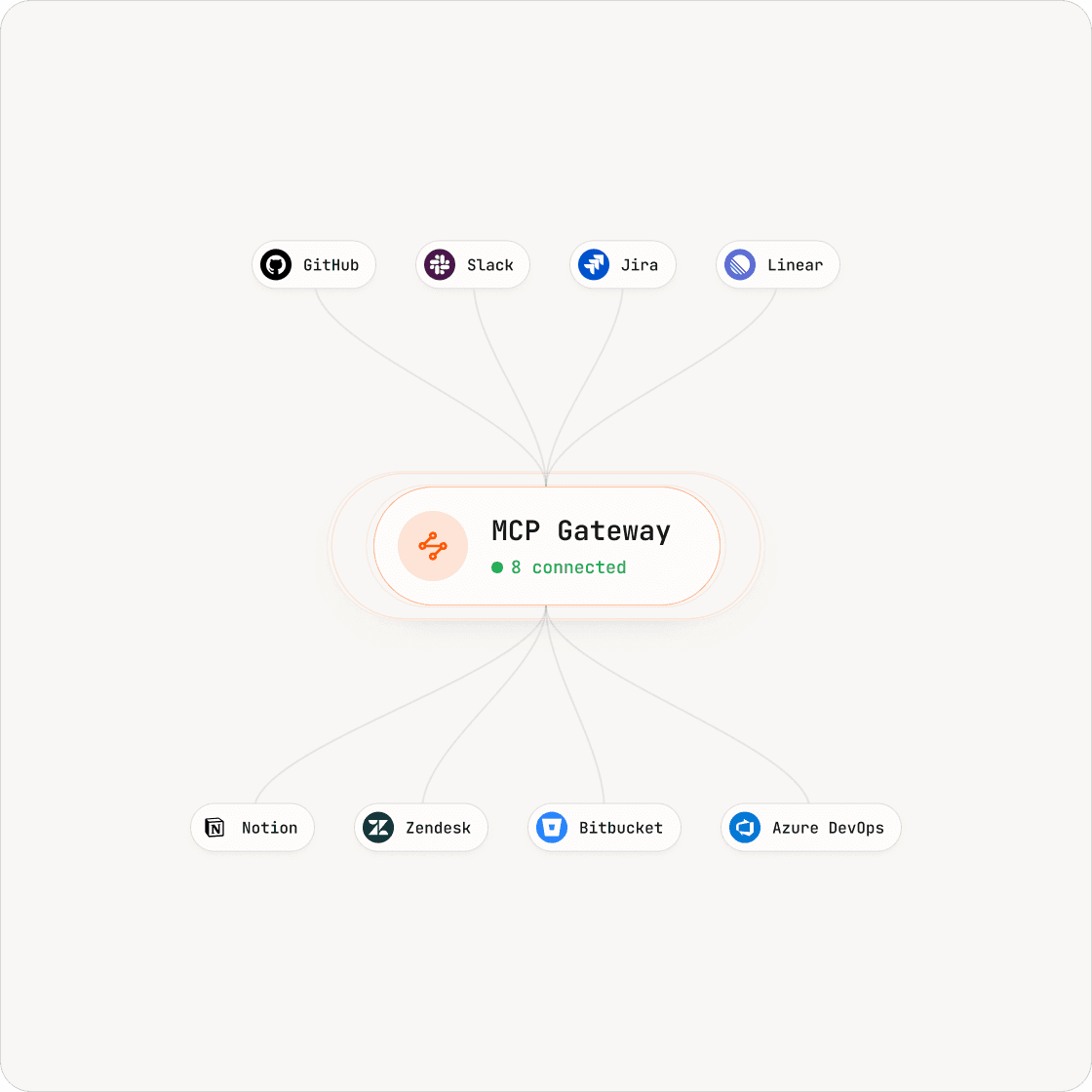
Connect the systems your team already runs on—no migrations required.
Frequently asked questions
AI adoption is a team using AI. AI transformation is an organization operating on AI. Adoption is bottom-up and often chaotic. Transformation requires shared infrastructure, governance, and a repeatable path from experiment to production so agents become part of how the business runs, not one-off projects on the side.
Pilots succeed on individual effort. Production requires shared infrastructure that most companies haven't built: identity, credentials, permissions, audit trails, observability, and cost controls, applied consistently across every agent. Without that layer, each new agent triggers the same integration work again. Guild is that layer.
Guild provides one operating model without forcing every team to work the same way. Engineers keep their preferred tools and workflows. Platform teams define a secure path from development to production. Security teams get centralized governance and audit trails. Leadership sees adoption, spend, and value across every agent, in one view.
Yes. Guild is neutral by design. Every team can bring agents built with the framework, model, and tools they already use. Guild provides the shared control plane above all of them, so the organization gets consistent governance without forcing team-level standardization.
Guild gives leadership one view of agent adoption, activity, performance, and cost across the organization. Track usage by team, agent, user, and model. See which agents are delivering value and which aren't. Move from anecdotal AI reporting to measurable transformation outcomes.
An enterprise AI agent platform is the software infrastructure that lets an organization discover, deploy, govern, and monitor AI agents at scale. The difference from standalone AI tools is central control: agent identities, permissions, integrations, and runtime behavior are managed in one place instead of per-tool. Guild is built for teams moving past one-off AI experiments toward a repeatable, governed operating model for agents.
Agent governance is the set of policies, controls, and audit mechanisms that determine how AI agents are authorized to act inside an organization: which data sources an agent can access, what actions it can perform, which users and teams can invoke it, and how its behavior is logged and reviewed. It is essential for regulated industries, and for any enterprise that needs accountability over automated decision-making.
Guild gives IT and security teams a centralized view of every agent running in the environment: what systems each agent connects to, what credentials it uses, and what actions it has taken at runtime. Access controls are configured at the agent level, so only authorized users and systems can invoke specific agents. That closes the shadow AI gap, where agents proliferate across teams without central oversight.
A model registry tracks machine learning models: versions, training data, performance metrics. An agent catalog inventories deployable agents, which combine models with tools, workflows, credentials, and permissions. Guild's Agent Hub is built for operational use: teams find working agents, see exactly what each one does before installing it, and run them governed in a workspace instead of building from scratch.
Yes. Guild integrates SSO (SAML/OIDC), SCIM provisioning and role-based access control, and applies the same least-privilege model to agents.
Guild is SOC 2 Type 2 compliant. See trust.guild.ai for the full security posture.