Every engineer is shipping agents.No one is governing them.
Governance, visibility, and control at scale. Guild gives platform, security, and engineering leaders one place to manage agent access, credentials, cost, compliance, and more.
One Control Plane to Rule Them All
You can finally answer the 3am question.
One place to see every agent, govern what it can access, and track what it costs.


Sound familiar?
Every engineering org shipping agents is living this.
These aren't tooling problems. They're governance gaps.
What enterprises get
The layer to manage and scale agents in production.


Each agent gets its own identity. Keys are stored at the org level, granted per endpoint, and never exposed to agent code.

Every agent action is logged with who, what, when, and why. Session-level traces, tool invocations, and LLM calls — all queryable and exportable.

Real-time dashboards for token usage, cost per agent, cost per model, and top consumers. Finance and engineering see the same numbers.

Agents access LLMs through Guild's proxy layer. Switch providers, enforce rate limits, and audit every prompt — without changing agent code.

A shared catalog where teams publish, discover, and fork agents. Version-controlled, searchable, and governed.

Define approval gates for sensitive actions. Agents pause and wait for human review before proceeding. Configurable per agent, per action.
Real-time dashboards for adoption, activity, sessions, service usage, and LLM spend across your organization.
The Guild difference
Designed to support teams at every stage — from rapid growth to global scale
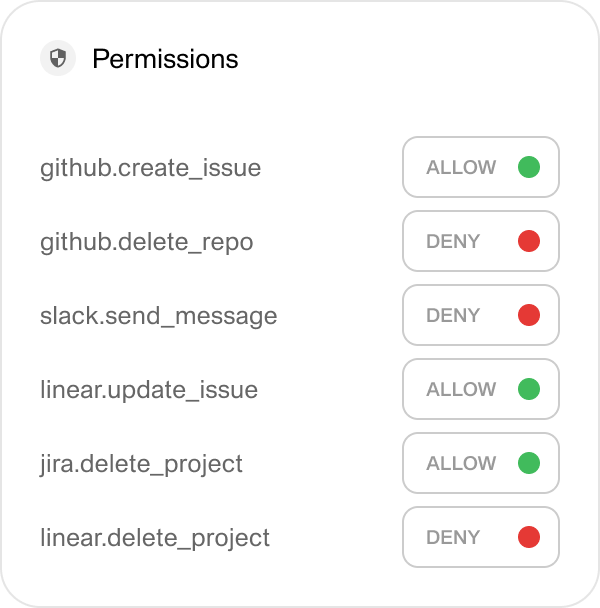
Governance in the runtime
Permissions are enforced before the agent runs, not flagged after. The control plane isn't bolted on. It's how agents execute.
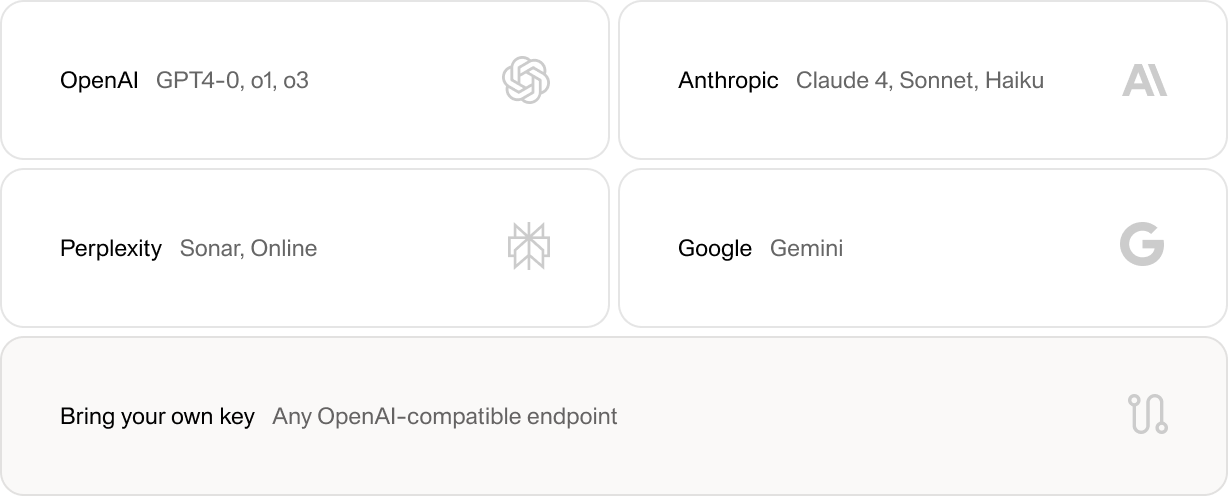
Model-agnostic
OpenAI, Anthropic, Google, or any OpenAI-compatible endpoint. No vendor lock-in. Switch providers without changing agents.
Framework-agnostic
Coming soonDeploy agents built with any framework. Mastra, LangChain, CrewAI, or custom code. Guild manages how agents run, not how they are built.
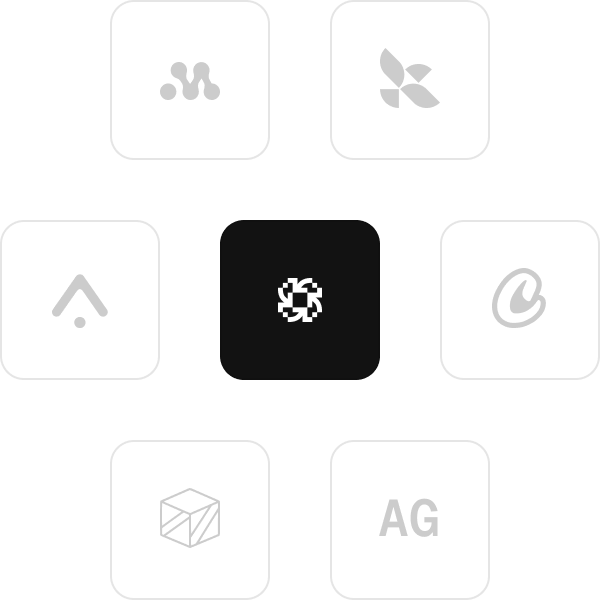
One control plane for all agents
Not a different tool for every team. One place where every agent is inventoried, governed, observed, and shared. Central control without central bottlenecks.
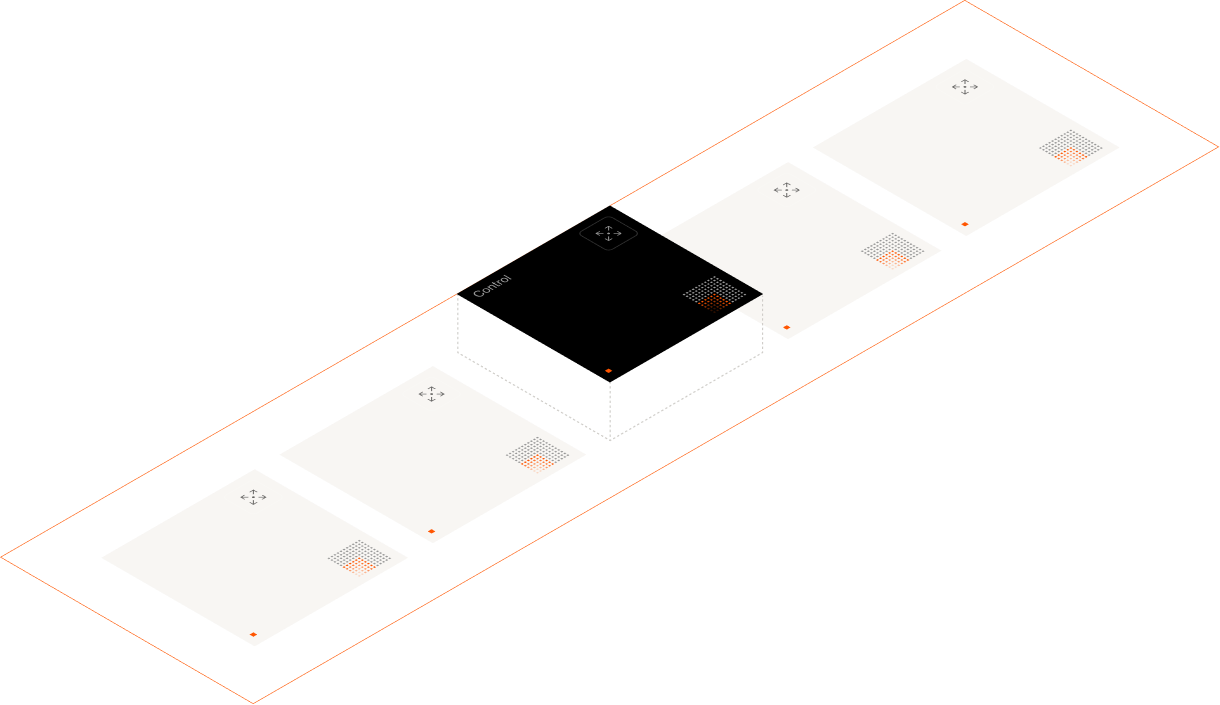
One platform. Four pillars.
Every stage covered. Build, deploy, govern, and share agents — in one control plane.

Build
Any surface you like — SDK, CLI, or UI. Start with production-ready starters from Agent Hub, or scaffold from scratch.

Deploy
Any framework, any model. Guild handles the runtime so you don’t. Event-driven by default — agents run when the world changes.

Govern
This is where most platforms fall short. Guild treats governance as architecture, not a feature.

Share
Stop rebuilding the same agent four times across four teams. Guild treats agents like source code — versioned, forkable, discoverable.
Teams closing the governance gap
See how engineering teams use Guild across support, triage, code review, and internal tools.
Our early work with Guild.ai has been instrumental as we expand how we use AI agents at Turo.

Guild.ai gives us the visibility and governance layer we were missing: a single place to manage how agents interact with our systems, what they can access, and what they cost.

With Guild.ai we now have a structured way to deploy and govern these agents without having to build the management layer ourselves.

Our early work with Guild.ai has been instrumental as we expand how we use AI agents at Turo.
Guild.ai gives us the visibility and governance layer we were missing: a single place to manage how agents interact with our systems, what they can access, and what they cost.
With Guild.ai we now have a structured way to deploy and govern these agents without having to build the management layer ourselves.
Frequently Asked Questions
About AI Agent Control Planes
Traditional API management platforms (like Apigee) regulate predictable, deterministic machine-to-machine traffic via rate limits and static payload routing. In contrast, an AI agent control plane manages non-deterministic, autonomous workflows. Guild operates directly inside the runtime layer, monitoring reasoning loops and multi-step tool execution paths. While an API gateway only validates access keys, Guild evaluates semantic prompt intent, intercepts unauthorized tool calls before they fire, handles human-in-the-loop approvals, and tracks token consumption.
Foundational governance takes less than an hour using our framework-agnostic runtime. Developers leveraging the Guild TypeScript or Python SDK can wrap existing LLM logic and deploy a governed agent within fifteen minutes. For broader enterprise setups, teams typically connect critical communication and codebase layers (like Slack, Jira, and GitHub) using native OAuth integrations within the first week. Transitioning an entire organization into secure production workspaces with scoped credential policies generally spans two to three weeks.
Guild provides out-of-the-box integrations with core enterprise platforms like GitHub, Jira, Slack, Linear, Zendesk, and Google Workspace. To eliminate the risk of hardcoded environment variables, secrets are managed centrally at the workspace level. Guild enforces a zero-trust model: tokens are dynamically resolved at the precise millisecond of execution and are never exposed to agent code or context windows. Custom REST endpoints or private APIs can also be registered via the Guild CLI.
Guild utilizes a model-agnostic proxy layer that mediates all upstream LLM communications. Whether your agents rely on OpenAI, Anthropic, Gemini, or local open-source models, they route through Guild's gateway. This allows platform teams to swap model providers, set automated failovers, or adjust rate limits without changing application code. This proxy also serves as an inline safety gate, auditing prompts and completions in real time to prevent data exfiltration and token over-usage.
Guild transforms non-deterministic AI behavior into concrete, auditable evidence required by frameworks like SOC 2 Type II, ISO 27001, and HIPAA. The platform generates immutable, session-level audit trails for every agent action, capturing the initial prompt, reasoning steps, tool calls, and payload responses. Because Guild isolates credentials outside the agent trust boundary and logs data access with strict causality, compliance teams can easily verify least-privilege enforcement and stream logs directly to enterprise SIEM systems.
Migrating existing agents to Guild is a streamlined, non-disruptive process. Because the platform is framework-agnostic, you do not need to rewrite your agent's core architecture or abandon orchestration tools like LangChain, Mastra, or CrewAI. Migration simply involves installing the Guild SDK, shifting your raw environment variables into secure workspace configurations, and routing your model calls through Guild's proxy gateway. This immediately applies session logging and granular endpoint permissions to your legacy agents.
Organizations using the Guild Control Plane typically realize a full return on investment within 30 to 45 days of production deployment. The primary driver is instant cost visibility: real-time dashboards track token consumption per agent, user, and model, allowing teams to eliminate runaway loops and inefficient prompting to cut waste by 25-40%. Additionally, engineering velocity increases because developers leverage pre-built security infrastructure rather than spending months coding custom credential managers and audit logs.
Building an enterprise-grade governance layer internally creates a massive, high-overhead engineering distraction. A home-grown solution requires building secure sandboxes, cryptographic credential managers, real-time streaming trace parsers, and human-approval interfaces across shifting LLM vendor APIs. Guild provides this infrastructure out of the box, shifting governance from fragmented application code down into a standardized runtime. This eliminates technical debt and guarantees absolute security isolation that home-grown middleware patterns cannot replicate.
The core differentiator is that Guild enforces governance inline during the agent runtime, rather than merely observing actions after the fact. Many AI observability tools act as retrospective logging dashboards—flagging data leaks or cost violations hours after they happen. Guild is an active control plane sitting between model execution and infrastructure. It evaluates policies pre-dispatch; if an agent attempts an unauthorized tool call or exceeds its budget, Guild intercepts and pauses the execution loop instantly.